
Portugal: D7 and D8 visas — a case with translating bank statements and contracts
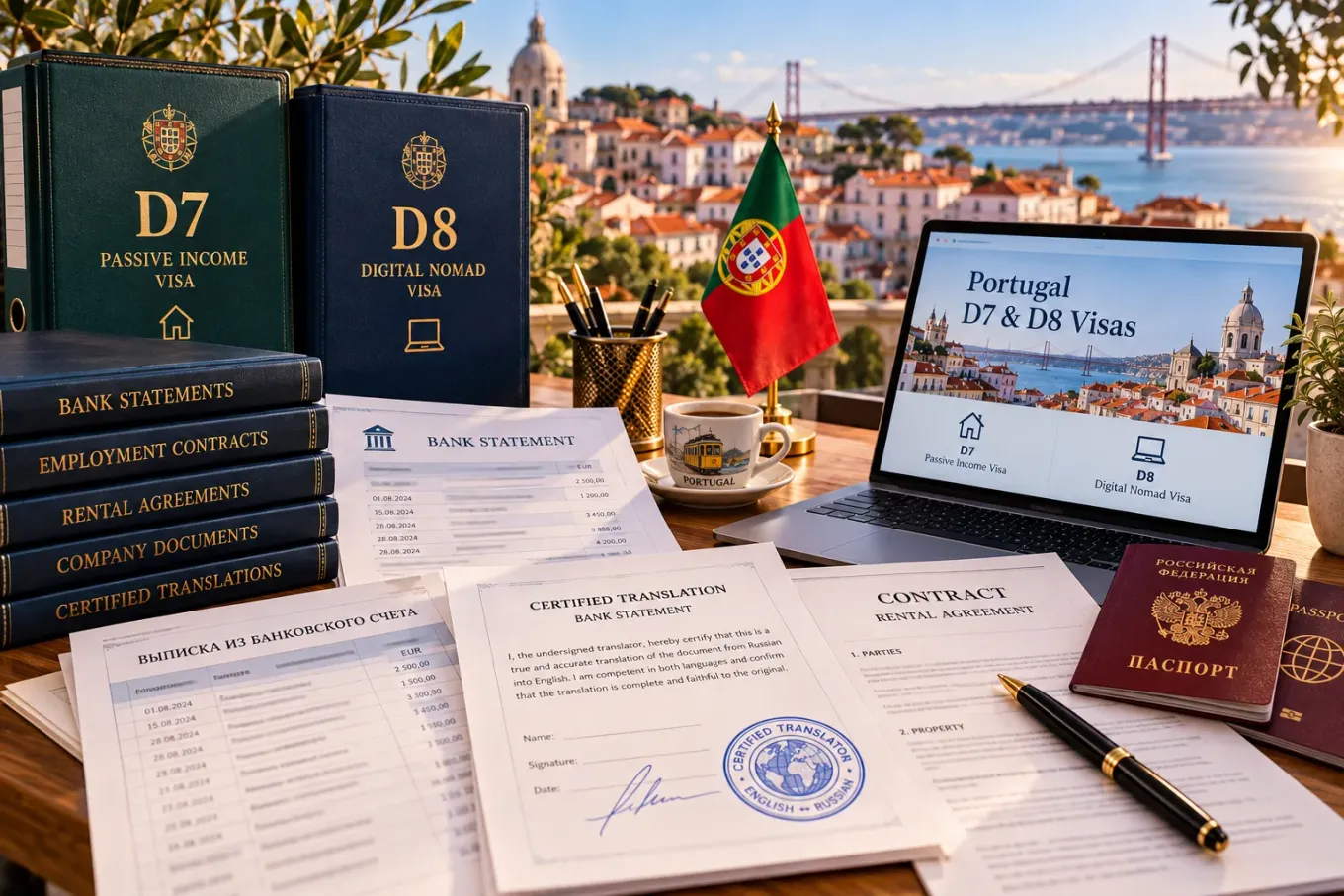
A remote developer applied for the Portuguese D8 digital nomad visa. The main requirement is proof of stable income from a foreign employer or clients, above a threshold linked to the Portuguese minimum wage. The first attempt failed: the visa centre returned the file because bank statements and the contract were not translated.
D7 and D8: the difference for documents
D7 is for people with passive income: pension, rent, dividends. D8 is for remote workers and freelancers. For D7 you prove regular passive income — rental agreements, pension certificates, statements. For D8 — an employment contract or client contracts, statements of incoming payments for recent months, sometimes tax returns.
How to translate
Documents not in Portuguese are translated into Portuguese or, for some documents, into English — check with the specific consulate or visa centre. The translation must be certified. State documents such as the criminal record certificate require an apostille, and the apostille text is translated too.
Bank statements are long tables. The translator must not lose amounts and dates and must keep the structure. If statements run to dozens of pages, consulates usually accept a bank-certified statement for the required period with totals — this reduces the volume of translation.
The case
The client replaced monthly statements with a bank summary of incoming payments for six months. The contract with a foreign client was in English and was accepted without translation. We translated the apostilled criminal record certificate into Portuguese. The second application went through without questions.
Tip: calculate in advance what income the current threshold requires and make sure the amounts in your statements cover it. No translation will help if the income is below the requirement.